

International Journal of Infection 2026; 10(1) January-April: 1-4
ARTICLE
OROS METHYLPHENIDATE MAY INDIRECTLY PROMOTE INFECTIONS BY REDUCING APPETITE AND PROMOTING SLEEP DISTURBANCES AND STRESS
Doyle R, Conti MJ. OROS methylphenidate may indirectly promote infections by reducing appetite and promoting sleep disturbances and stress. International Journal of Infection. 2026;10(1):1-4.
R. Doyle1 and M.J. Conti2*
1 Department of Psychiatry, Harvard Medical School, Boston, USA;
2 Department of Medicine, S. Andrea University “La Sapienza”, Rome, Italy.
*Correspondence to:
Michelangelo J. Conti, MD,
Department of Medicine,
S. Andrea University “La Sapienza”,
00189 Rome, Italy.
e-mail: michelangeloconti99@gmail.com
| Received: 27 January, 2026 Accepted: 13 March, 2026  |
ISSN 3103-6678 [online] Copyright 2026 © by Biolife-publisher This publication and/or article is for individual use only and may not be further reproduced without written permission from the copyright holder. Unauthorized reproduction may result in financial and other penalties. Disclosure: all authors report no conflicts of interest relevant to this article. |
ABSTRACT
Osmotic release oral system (OROS) methylphenidate is a medication used for attention deficit hyperactivity disorder (ADHD) that can cause some indirect effects on the immune system, albeit mild. Impaired immune function can increase the risk of infectious diseases caused by pathogenic and opportunistic microorganisms. In children, weakened immune function after taking OROS methylphenidate may be due effects related to the medication such as reduced appetite, sleep disturbances, and/or stress. Sleep is a crucial function for the immune system, and disturbances can cause fatigue or behavioral difficulties, which can compromise the immune system and thus the defense responses to microorganisms. Prolonged use of OROS methylphenidate in children with ADHD may be associated with mild nutritional deficiencies (protein, vitamins, and minerals) with mild immunosuppressive effects. The increase in dopamine and norepinephrine activates the sympathetic nervous system, stimulates β-adrenergic receptors on immune cells, and inhibits T-lymphocyte proliferation, resulting in an increased risk of infection. Treatment with OROS methylphenidate can increase the levels of certain hormones, such as cortisol, which is a stress hormone and an immune suppressant. High cortisol levels reduce the response of immune cells, including T lymphocytes, which are necessary for the production of antibodies produced by B cells. In conclusion, it can be deduced that treatment with OROS methylphenidate in children with ADHD may indirectly reduce the immune response and therefore the body’s defenses against microbial infections.
KEYWORDS: OROS methylphenidate, attention deficit hyperactivity disorder, ADHD, immune system, disease, infection
INTRODUCTION
Osmotic release oral system (OROS) methylphenidate is an extended-release central nervous system stimulant used to treat attention deficit hyperactivity disorder (ADHD) that gradually delivers medication for 12 hours. It can cause reduced appetite, sleep disturbances, and/or stress, and its effects on the immune system have been reported (1). Immune cells are not directly affected by OROS methylphenidate therapy, which does not cause an increase in opportunistic infections, as occurs after treatment with chemotherapy or corticosteroids (2). OROS methylphenidate alters the levels of neurotransmitters such as norepinephrine and dopamine, which participate in immune system regulation (3). In these cases, changes in pro-inflammatory cytokines may occur, but these effects are not significant. The direct effects of OROS methylphenidate on the immune system are subtle and may occur indirectly by weakening the immune system and affecting the response to infections. The use of extended-release OROS methylphenidate, which causes an increase in dopamine and norepinephrine, and its relation to infections is an interesting, although not entirely clear, topic (4).
In the OROS formulation, methylphenidate increases dopamine and norepinephrine levels in the brain and improves attention and impulse control (5). These effects are due to the blockade of dopamine and norepinephrine reuptake, which remain active in the synapses for a longer period of time. Methylphenidate is not an immunosuppressant and does not directly and significantly increase the risk of infections, but it may do so by causing stress, reduced appetite, and/or sleep disturbances (6). These factors can influence susceptibility to infections. The decreased appetite caused by OROS extended-release methylphenidate can indirectly affect the immune system. A decreased appetite results in the ingestion of fewer proteins needed to produce antibodies, fewer vitamins, and fewer minerals needed to produce efficient immune cells and maintain proper immune system function. These deficiencies can reduce the body’s ability to fight infections. Food restriction can alter levels of cortisol (a stress hormone) and leptin, which are involved in the immune response. Furthermore, the gut microbiota can be altered, resulting in dysregulation of microorganisms that are essential for the body’s physiological functioning (7).
TREATMENT WITH OROS METHYLPHENIDATE AND THE IMMUNE RESPONSE
Treatment with OROS methylphenidate in children with ADHD can cause sleep disturbances that affect the immune response (8). Sleep disturbances in children cause fatigue or behavioral difficulties, which can compromise the immune system, affecting the body’s ability to defend against infections. During sleep, several hormones are produced, such as melatonin, growth hormone, cortisol, leptin, prolactin, insulin, amongst others. Sleep is important for regulating the immune system, as cytokines, immune mediators that help fight infections and inflammation, are produced during rest (9). Furthermore, sleep strengthens immune memory, the body’s ability to recognize microorganisms such as viruses and bacteria. These functions are particularly important for children whose immune systems are not yet fully developed. Therefore, sleep disturbances affect the immune system, increasing the risk of infectious diseases. Children who sleep poorly tend to get sick more often than those who sleep normally. Additionally, sleep deprivation can weaken the response to vaccinations, making children less protected and can increase inflammation levels in the body, causing dysregulation of cortisol, a hormone that influences the immune system (10). Sleep deprivation can also affect nutrition, increase stress, and reduce energy. Good sleep is crucial for children’s immune health; it helps children grow and learn and also protects them from infections and diseases (11).
Prolonged use of OROS methylphenidate is released osmotically in children with ADHD and may be associated with nutritional deficiencies resulting from a combination of metabolic, neurochemical, and endocrine factors (12). Regarding neurochemical effects, methylphenidate blocks the norepinephrine and dopamine transporters, increasing their synaptic levels (5). The increase in dopamine and norepinephrine activates the sympathetic nervous system, activating β-adrenergic receptors on immune cells, modulating the production of both pro- and anti-inflammatory cytokines, and inhibiting T-cell proliferation resulting in immune deficiency (13). These effects are not very pronounced, but they can reduce the antiviral response, resulting in reduced efficacy against infections and making the patient more vulnerable.
Reduced appetite leads to reduced intake of iron, zinc, and vitamins (A, C, D, B, and others), which are important for fighting microbial infections. Increased catecholamine metabolism can generate reactive oxygen species and deplete antioxidant reserves, resulting in reduced immune cell efficiency and increased need for protective micronutrients (14). Therefore, methylphenidate does not directly lead to infections, but it can create nutritional and neuroendocrine conditions that reduce the effectiveness of the immune system, especially in children.
Treatment with OROS methylphenidate can induce mild physiological stress in children characterized by tachycardia, increased blood pressure, and activation of the sympathetic nervous system. These effects may slightly, but not severely, reduce the immune response (9).
Inhibition of dopamine transporter (DAT) and norepinephrine transporter (NET) leads to an increase in synaptic catecholamines through a mechanism of inhibition of DAT and NET (5). These effects result in increased dopamine in the prefrontal cortex and norepinephrine in the locus coeruleus and peripheral nervous system. Norepinephrine acts on β1-adrenergic receptors in the heart, causing an increase in heart rate, while stimulation of α1 receptors in blood vessels induces peripheral vasoconstriction and increased blood pressure.
The hypothalamic-pituitary-adrenal (HPA) axis is the main biological system involved in the stress response, and catecholaminergic stimulation can cause an increase in corticotropin-releasing hormone (CRH) in the hypothalamus, adrenocorticotropic hormone (ACTH) in the pituitary gland, and cortisol in the adrenal gland, resulting in immunosuppression (15). This does not represent pathological stress, but rather an adaptive modulation. These effects are mild in children because the release of OROS methylphenidate is gradual and low-peaked, and therapeutic doses do not saturate the peripheral sympathetic nervous system.
OROS methylphenidate generally does not cause significant effects on the immune system, nor does it increase the risk of infections, although these issues are widely debated. Therefore, there is no direct molecular mechanism demonstrating immunosuppression due to methylphenidate treatment. The increase in the neurotransmitters dopamine and norepinephrine influences the immune system and can be both positive and negative, depending on the amount, timing, and context (16).
Dopamine acts on both brain and immune cell receptors to modulate inflammation, which can increase or decrease depending on dopamine levels. Dopamine can regulate T lymphocytes and influence the activation of the immune response, but it may also play a physiological role in maintaining immune homeostasis (16). Norepinephrine is a mediator of the sympathetic nervous system and stress, it inhibits the immune system (although some immune cells may be stimulated), and it can reduce the production of inflammatory cytokines (17) (Fig.1).
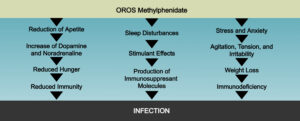
Fig. 1. Osmotic release oral system (OROS) methylphenidate used for treating attention deficit hyperactivity disorder (ADHD) can cause reduced appetite, sleep disturbances, and/or stress, which can lead to a weakened immune system and thus, increased vulnerability to infections.
CONCLUSIONS
Treatment with OROS methylphenidate in children with ADHD, indirectly, although weakly, reduces the immune response and therefore the body’s defenses against microbial infections. OROS methylphenidate is not an immunosuppressant and does not directly weaken the immune system. However, some of its side effects, such as decreased appetite, sleep disturbances, and increased stress, can indirectly weaken the body’s defenses if persistent, especially in children and individuals with already weakened immune systems, and facilitate the onset of diseases, including infections.
Conflict of interest
The authors declare that they have no conflict of interest.
REFERENCES
- Auci DL, Fikrig S, Rodriquez J. Methylphenidate and the immune system. Journal of the American Academy of Child & Adolescent Psychiatry. 1997;36(8):1015-1016. doi:https://doi.org/10.1097/00004583-199708000-00004
- Youssef J, Novosad SA, Winthrop KL. Infection Risk and Safety of Corticosteroid Use. Rheumatic Disease Clinics of North America. 2016;42(1):157-176. doi:https://doi.org/10.1016/j.rdc.2015.08.004
- Hammerness P, Georgiopoulos A, Doyle RL, et al. An Open Study of Adjunct OROS-Methylphenidate in Children Who Are Atomoxetine Partial Responders: II. Tolerability and Pharmacokinetics. Journal of Child and Adolescent Psychopharmacology. 2009;19(5):493-499. doi:https://doi.org/10.1089/cap.2008.0126
- Yim JE. Therapeutic benefits of laughter in mental health: A theoretical review. The Tohoku Journal of Experimental Medicine. 2016;239(3):243-249. doi:https://doi.org/10.1620/tjem.239.243
- Cho SC, Kim BN, Cummins TD, Kim JW, Bellgrove MA. Norepinephrine transporter −3081(A/T) and alpha-2A-adrenergic receptor MspI polymorphisms are associated with cardiovascular side effects of OROS-methylphenidate treatment. Journal of Psychopharmacology. 2011;26(3):380-389. doi:https://doi.org/10.1177/0269881111405356
- Kim JW, Park S, Kim BN, et al. Parental Perceived Benefits of OROS-Methylphenidate Treatment for the Child with Attention-Deficit/Hyperactivity Disorder and for Parents Themselves. Pharmacopsychiatry. 2013;46(04):137-146. doi:https://doi.org/10.1055/s-0032-1331749
- Keating GM, McClellan K, Jarvis B. Methylphenidate (OROS??Formulation). CNS Drugs. 2001;15(6):495-500. doi:https://doi.org/10.2165/00023210-200115060-00006
- Kim HW, Yoon IY, Cho SC, et al. The effect of OROS methylphenidate on the sleep of children with attention-deficit/hyperactivity disorder. International Clinical Psychopharmacology. 2010;25(2):107-115. doi:https://doi.org/10.1097/yic.0b013e3283364411
- Garnock-Jones KP, Keating GM. Atomoxetine. Pediatric Drugs. 2009;11(3):203-226. doi:https://doi.org/10.2165/00148581-200911030-00005
- Irwin MR. Why Sleep Is Important for Health: A Psychoneuroimmunology Perspective. Annual Review of Psychology. 2015;66(1):143-172. doi:https://doi.org/10.1146/annurev-psych-010213-115205
- Besedovsky L, Lange T, Haack M. The Sleep-Immune Crosstalk in Health and Disease. Physiological Reviews. 2019;99(3):1325-1380. doi:https://doi.org/10.1152/physrev.00010.2018
- Yeh JY, Shyu YC, Lee SY, et al. Comorbidity of Narcolepsy and Psychotic Disorders: A Nationwide Population-Based Study in Taiwan. Frontiers in Psychiatry. 2020;11. doi:https://doi.org/10.3389/fpsyt.2020.00205
- Esler M, Kaye D. Measurement of sympathetic nervous system activity in heart failure: the role of norepinephrine kinetics. Heart Failure Reviews. 2000;5(1):17-25. doi:https://doi.org/10.1023/a:1009889922985
- de Miranda Drummond PL, de Araújo Silva C, de Souza JE, et al. Efficacy and safety of thalidomide for oncology-related uses approved in Brazil: An overview of systematic reviews. Journal of oncology pharmacy practice : official publication of the International Society of Oncology Pharmacy Practitioners. 2025;31(8):1277-1306. doi:https://doi.org/10.1177/10781552251348931
- Tsigos C, Chrousos GP. Hypothalamic–pituitary–adrenal axis, neuroendocrine factors and stress. Journal of Psychosomatic Research. 2002;53(4):865-871. doi:https://doi.org/10.1016/s0022-3999(02)00429-4
- Strandwitz P. Neurotransmitter Modulation by the Gut Microbiota. Brain research. 2018;1693(Pt B):128-133. doi:https://doi.org/10.1016/j.brainres.2018.03.015
- Kohm AP, Sanders VM. Norepinephrine: a messenger from the brain to the immune system. Immunology Today. 2000;21(11):539-542. doi:https://doi.org/10.1016/s0167-5699(00)01747-3